
Crane Path and Buried Utility Risk Evaluation for Data Center
Central Virginia
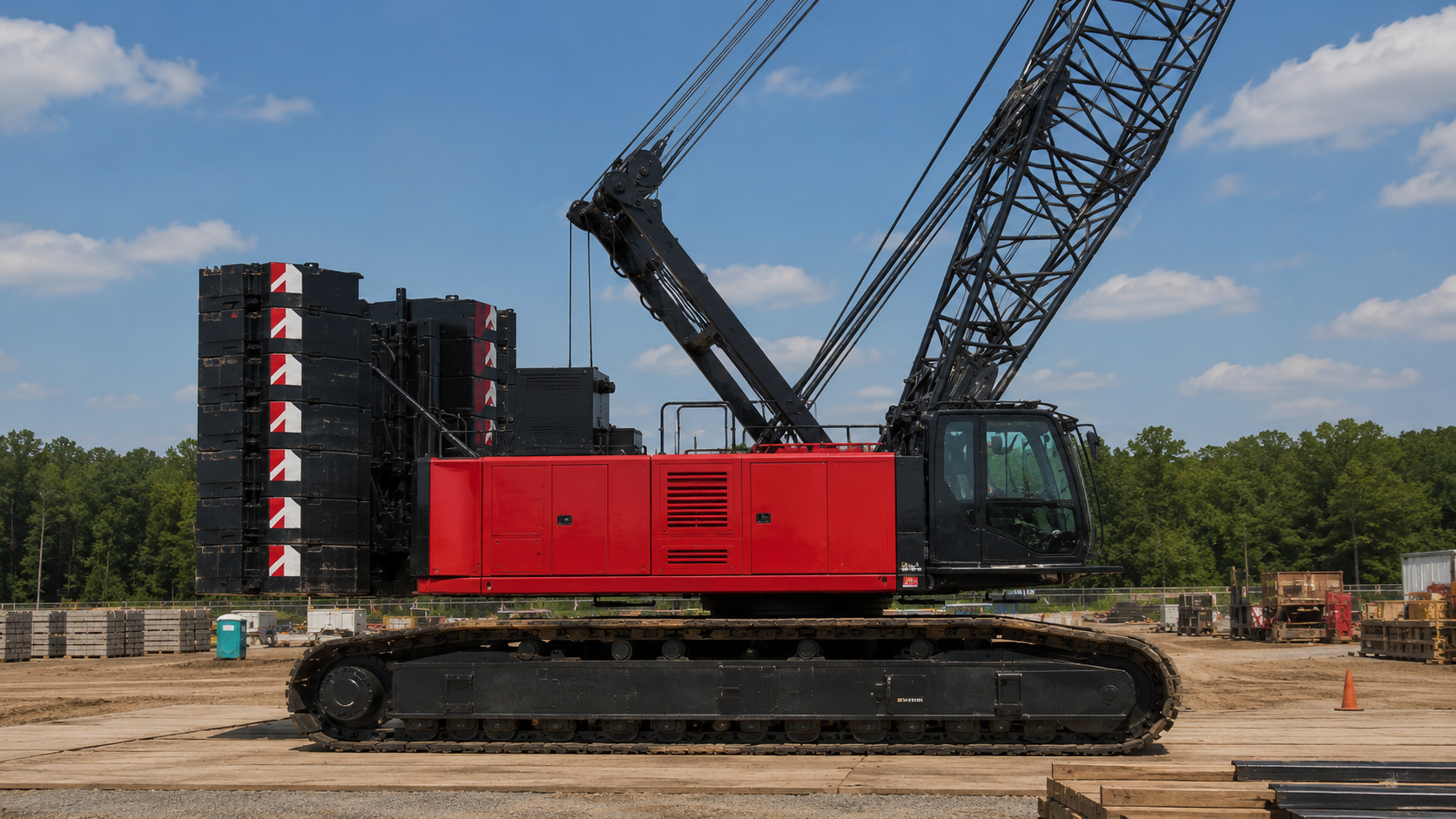
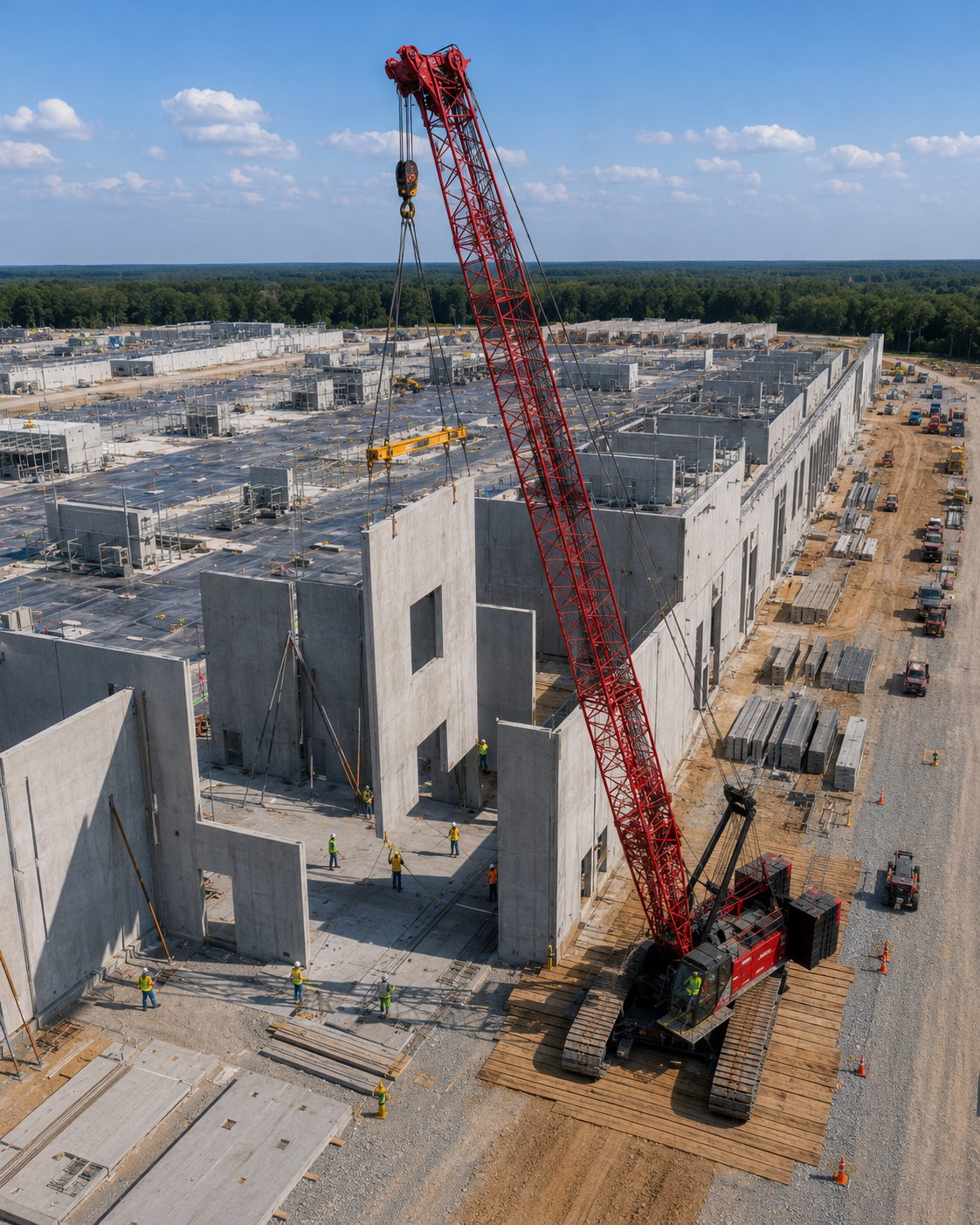
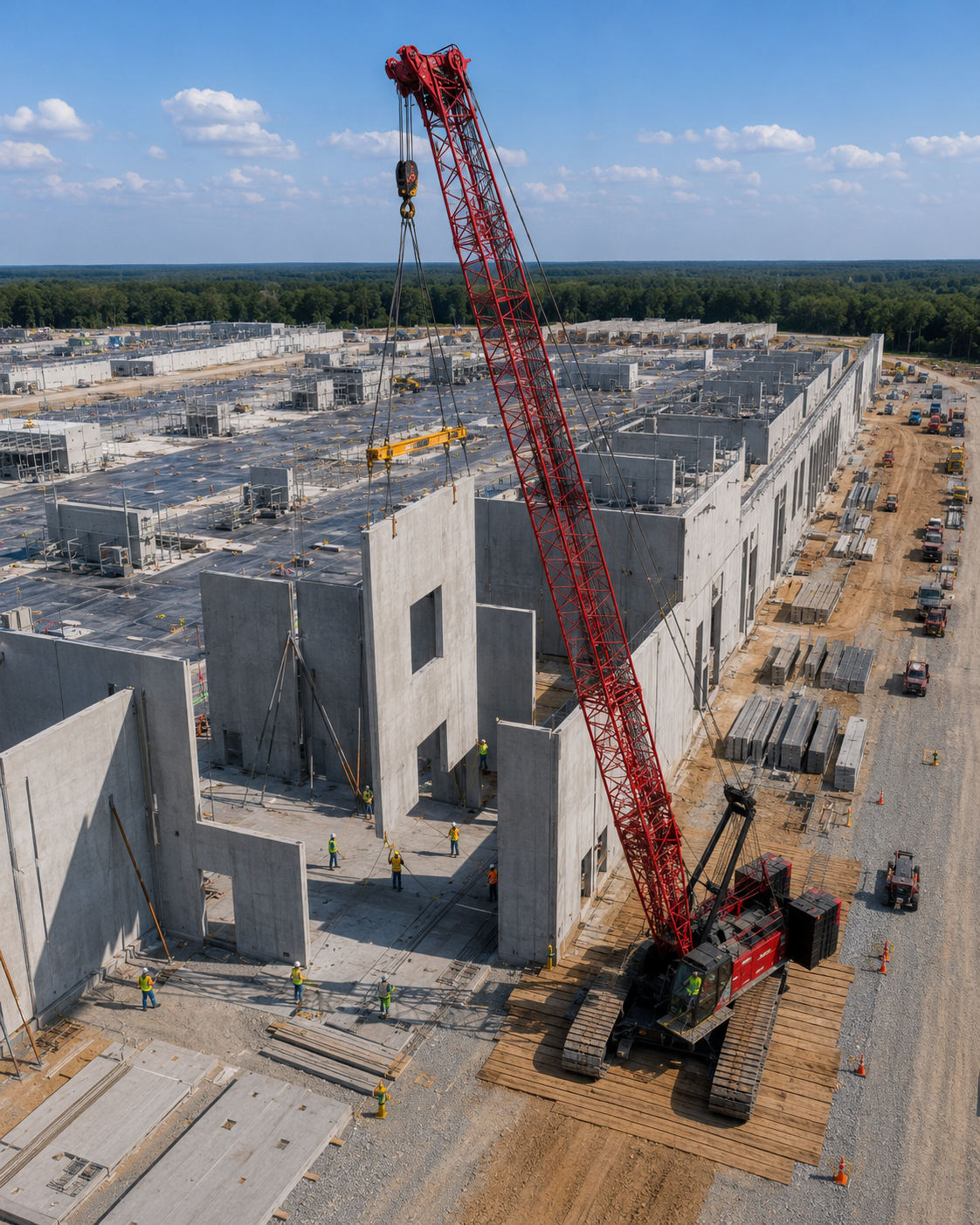
InnovoGeo Engineering performed a desktop-level geotechnical evaluation for a planned crawler-crane path at a large, confidential data center campus in Central Virginia. The proposed route crossed or passed near existing concrete-encased duct banks and precast reinforced-concrete utility vaults, creating concerns related to crane-induced settlement, differential movement, and increased lateral loading on buried infrastructure.
InnovoGeo developed a flexible spreadsheet-based analytical framework that enabled rapid, detailed comparisons of alternative crane-track loads, timber-mat systems, working-platform geometries, utility depths, and soil-parameter assumptions. Multiple stress-distribution methods were used to compare vertical stress propagation, while constrained-modulus relationships were applied to estimate settlement and angular distortion. The evaluation also compared estimated lateral stresses against available vault design-load envelopes and identified the variables and assumptions most influential to the results. The framework was structured to incorporate advanced in-situ testing data, if later obtained, allowing the model and calculated outputs to be updated efficiently following field testing.
The resulting memorandum gave the project team a transparent, scenario-based tool for comparing ground-related risks and potential mitigation measures. Recommendations included site-specific verification through field observations, in-situ testing, instrumentation, and more advanced numerical modeling where warranted. Together, the analysis and recommendations supported more informed crane-planning decisions around critical buried infrastructure.