Ground Truths - On Maslow's Hammer
Maslow’s Hammer, often called the law of the instrument, is commonly stated as: “If all you have is a hammer, everything looks like a nail.”
In engineering, this bias can quietly shape decisions. When we become too comfortable with a particular tool, method, or investigation type, we risk defaulting to it, even when it may not be the most appropriate solution. At InnovoGeo Engineering, we work intentionally to avoid that trap.
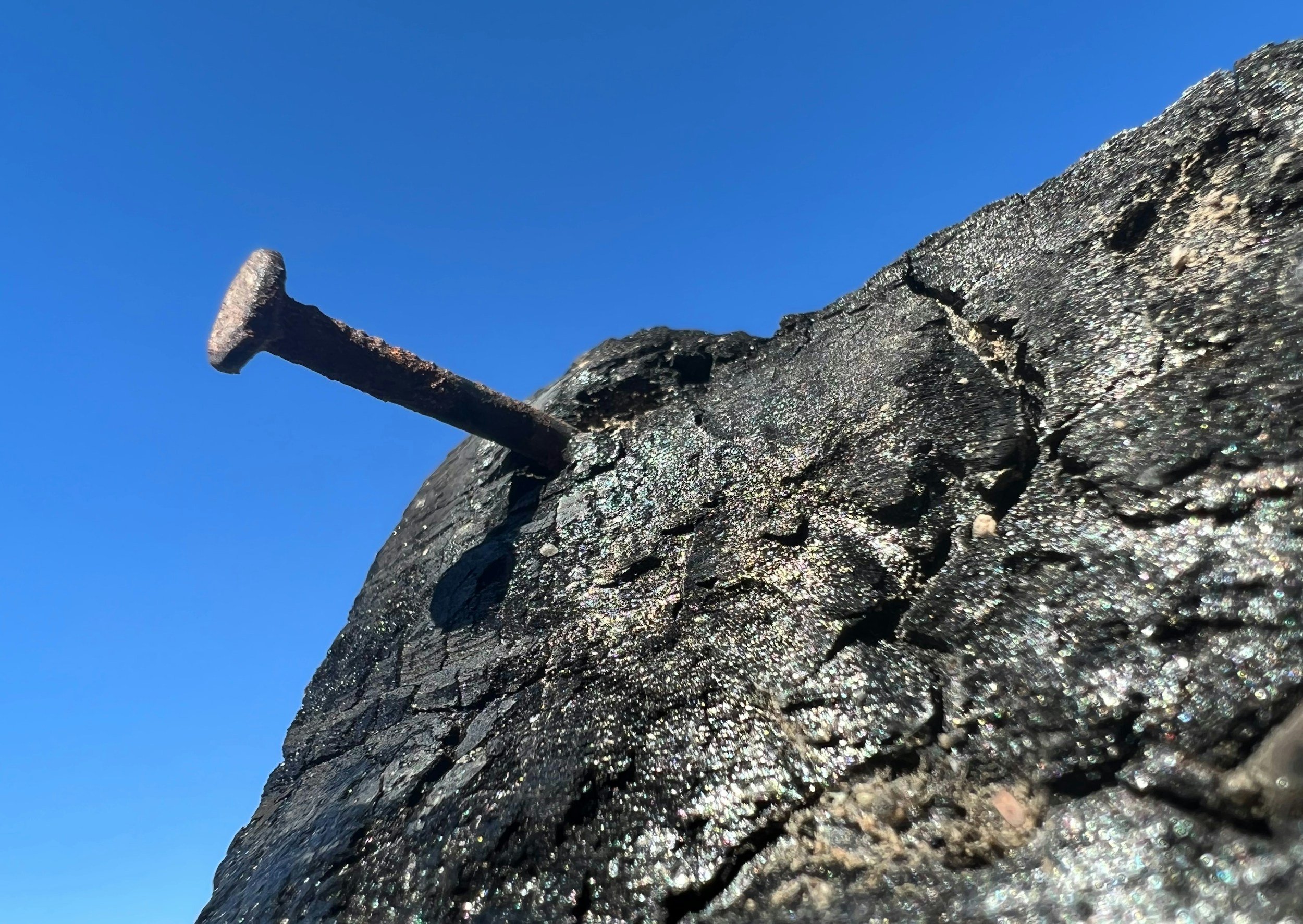
Thinking outside the box means we are willing to recommend tools, approaches, and investigation methods that may fall outside our in-house equipment inventory. Our objective is not to deploy only what we own, but to deliver the most cost-effective, highest-value risk mitigation strategies for our clients' projects. Sometimes that means talking clients out of the scope they initially request.
Occasionally, a client approaches us with something equivalent to: “We’d like a proposal to drive three conventional nails at our site with a hammer.” But experience may tell us that nails are not the best solution to the problem at hand.
In geotechnical practice, the “hammer” can take many forms:
Defaulting to conventional SPT borings when CPT soundings might better characterize stratigraphy and variability.
Recommending additional borings when geophysics could more economically evaluate subsurface anomalies over a larger area.
Performing laboratory testing that does not add value to the project or, conversely, not performing corrosion or other testing that could significantly reduce long-term risk.
Jumping straight to deep foundations or ground improvement when load redistribution or advanced in-situ testing like CPT or DMT could provide a more economical solution.
The art of geotechnical engineering lies in asking the right questions - not just about subsurface conditions, but about project goals, performance expectations, risk tolerance, schedule, constructability, and lifecycle considerations. Developing this art requires being a perpetual learner. It also requires curiosity and sometimes asking more questions than expected.
That curiosity allows us to step back and view the project from 30,000 feet. With a broad understanding of geology, construction methods, performance risks, and long-term soil-structure interaction, we can often propose investigation or design approaches that differ substantially from what was originally envisioned.
At times, this leads us to reduce scopes and fees, saving clients money.
At times, it leads us to subcontract or refer clients to colleagues with more specialized capabilities.
As engineers practicing under ethical codes, we believe it is our responsibility to make those recommendations when appropriate, even if it results in less contracted work for us.
Rather than rushing into the field to “drive the nails,” we pause and ask questions like:
What are these elements expected to support over the project life?
What are the subsurface conditions that will influence their performance?
Are we addressing variability adequately?
Is there a more durable or economical alternative?
Are we accounting for corrosion potential and long-term maintenance?
Perhaps a screw provides lower total cost. Perhaps corrosion testing now avoids premature deterioration later. Perhaps the issue is not capacity, but settlement tolerance. Perhaps the real solution begins with better site characterization, not more steel or concrete.
Engineering judgment is not about applying familiar tools. It is about selecting the right tool - or recognizing when an entirely different approach is warranted.
Avoiding Maslow’s Hammer requires humility, curiosity, and the willingness to challenge bias and assumptions, including our own. That is where real value is created.
For additional reading, see the 2025 publication "Message to Owners, Mitigating Risk with the Right Geotechnical Engineer" from the Geoprofessional Business Association (GBA). Some key takeaways from that publication:
Step 1: Choose a firm based on merit.
Step 2: Mutually develop a geotechnical scope of services.
Step 3: Meet to discuss findings and recommendations.
Step 4: Finalize the recommendations through construction observations.
Step 5: Engage the geotechnical engineering firm during construction – not a replacement firm.
"The amount you invest in the geotechnical engineer's services is tiny compared to the amount you invest in implementing the geotechnical engineer's recommendations."
Projects evolve. Conditions change. And sometimes a fresh set of eyes can identify risks or uncover alternative approaches.
Whether at the outset of an investigation, after design concepts are already in motion, or during or after construction, independent peer review can add measurable value, particularly on projects where subsurface uncertainty carries significant financial or performance risk. InnovoGeo provides independent and objective peer review and third-party evaluation services when an experienced second opinion would benefit projects.